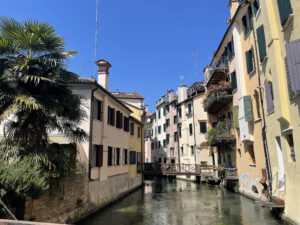
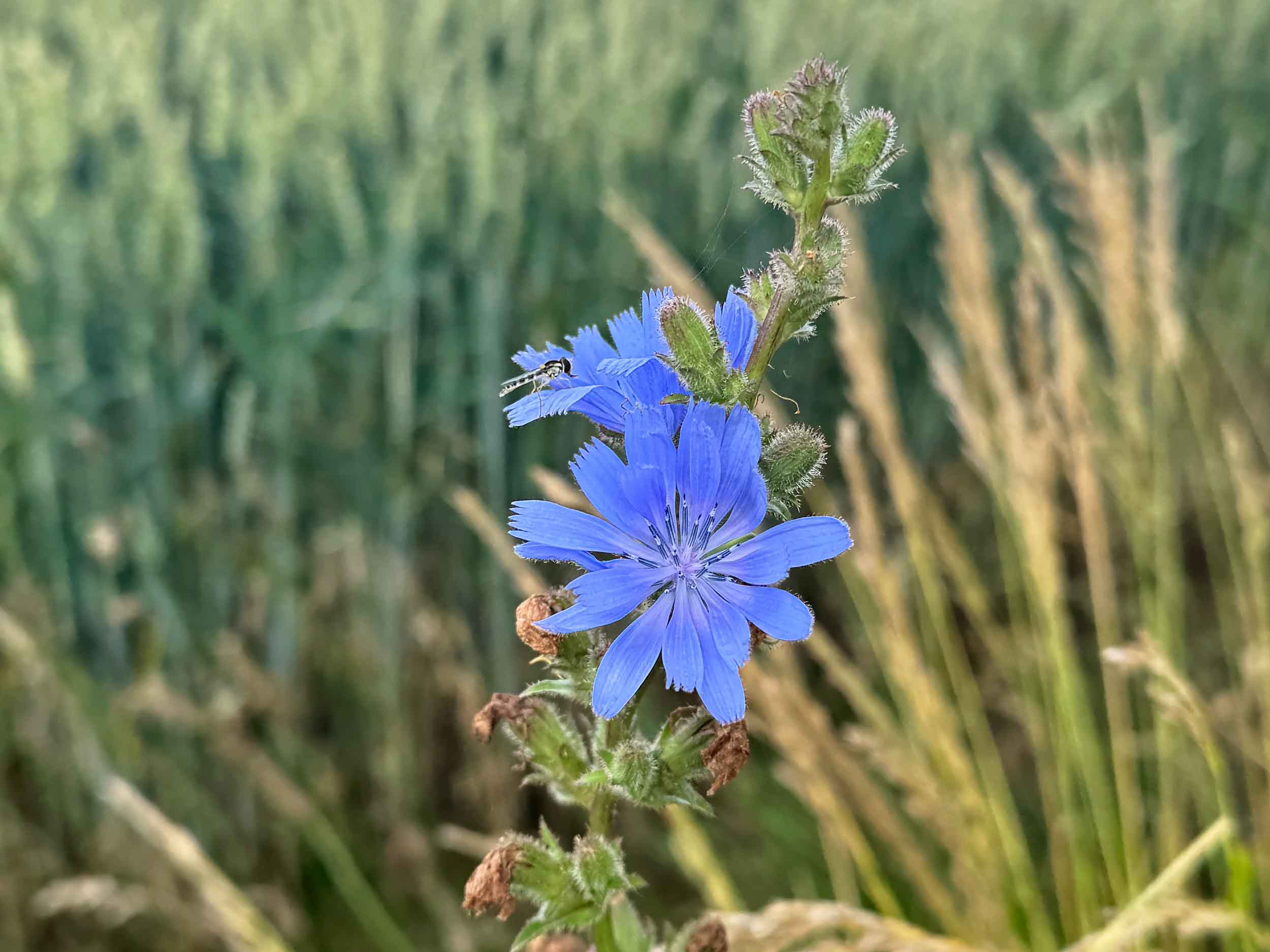
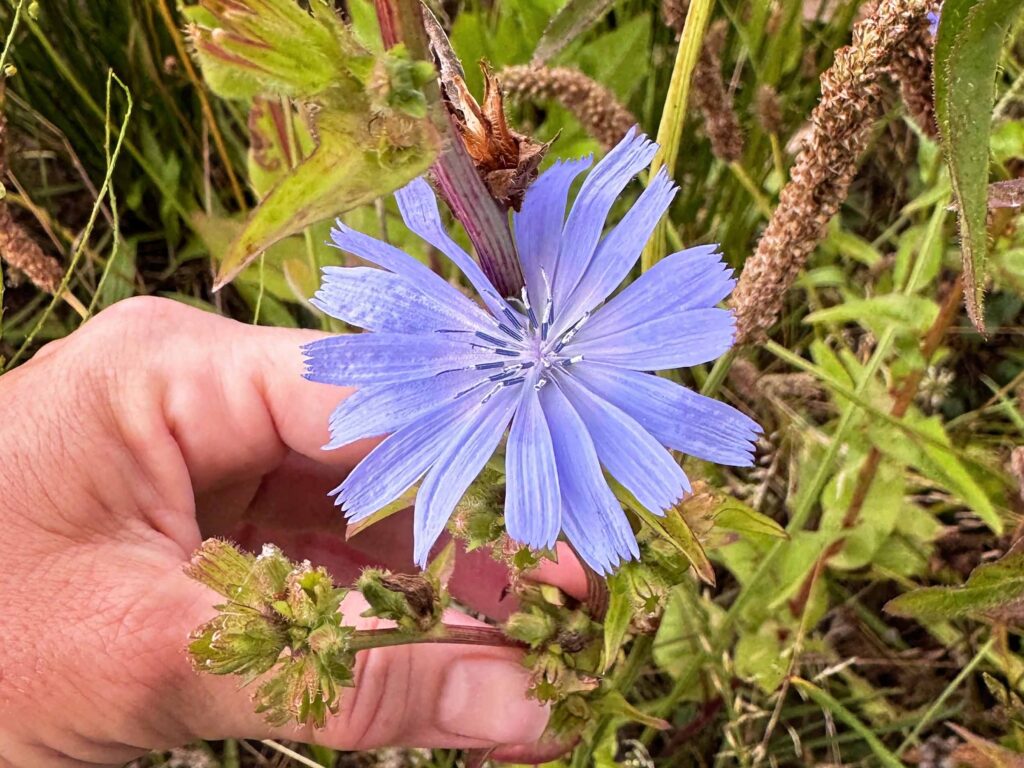
Driving home from work through the beautiful Skåne countryside at this time of year, the first thing I always notice is all those beautiful blue flowers growing along the roadsides. They are everywhere. If you live in southern Sweden, you’ve probably driven past them hundreds of times without giving them much thought.
For me, though, this flower immediately brings back a childhood memory.
My grandparents. Their little old moka. And coffee.
Believe it or not, my very first “coffee” wasn’t coffee at all. It was made from the roots of chicory (Cichorium intybus).
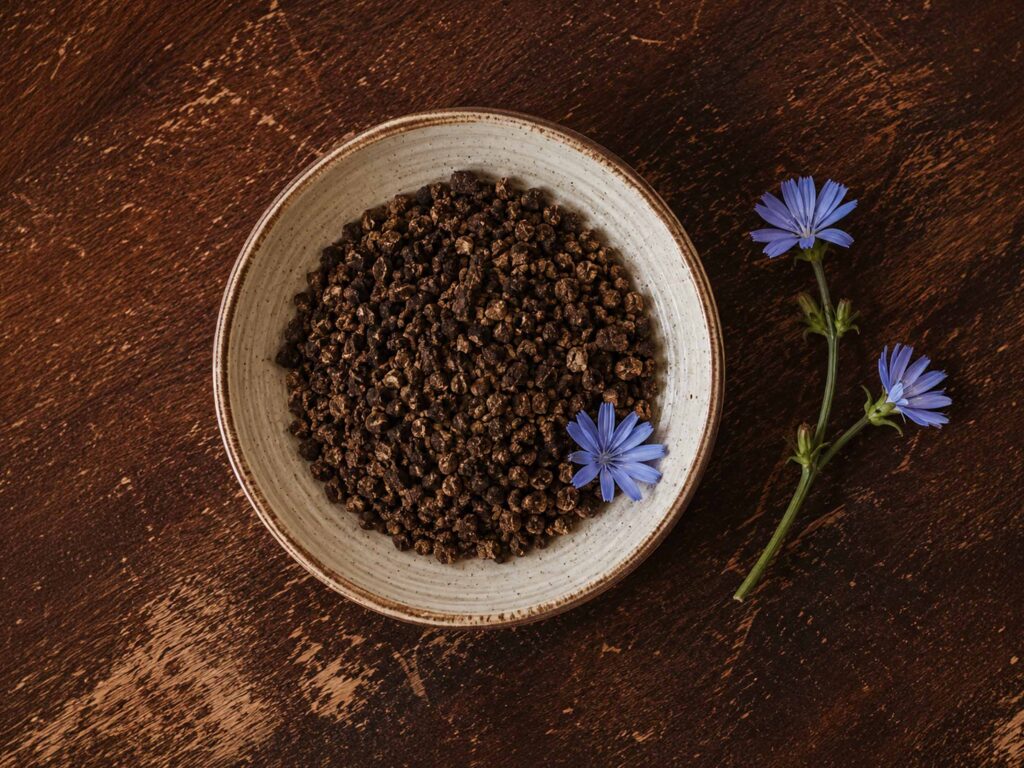
When I was growing up in Italy, my grandparents prepared it the traditional way. They dug up the roots, cleaned them, dried them, roasted them until they became dark and fragrant. Then they ground them as finely as they could, although the result was still quite coarse rather than a fine powder. They brewed it in their little moka, just like regular coffee. The result was a warm, slightly bitter drink with no caffeine at all.
That was my initiation into the world of coffee.
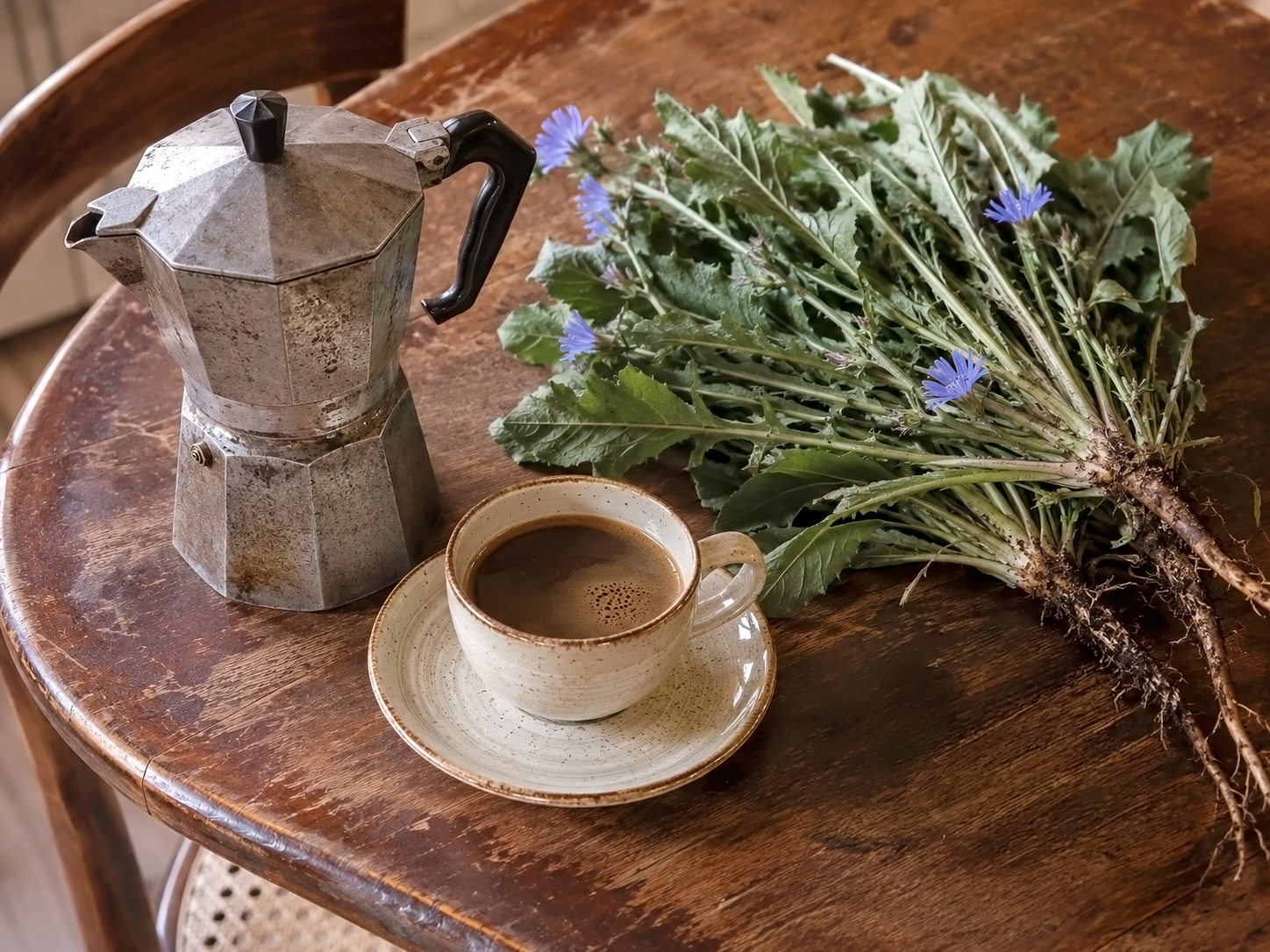
What I love most is that this little plant connects my two homes.
It grows wild all over Italy, where it has been gathered for centuries as both food and medicine. It also grows everywhere here in Skåne, quietly lining country roads, meadows and fields. Every July, it paints the landscape with its beautiful sky-blue flowers.
Even more fascinating is that Italy and Sweden share part of the same history with chicory. During times when imported coffee was scarce, especially during the World Wars and periods of rationing, roasted chicory root became an everyday coffee substitute in both countries. What started as a necessity became a tradition that many grandparents still remember.
To me, that makes this much more than a wild flower. It tells a story of resilience, creativity and making the most of what nature provides.
If you’re curious about foraging, chicory is one of the easiest wild plants to start with. It belongs to the same botanical family as the dandelion, and if you look closely you’ll notice that the leaves are remarkably similar. The young leaves are best picked in spring, before they become too bitter. They can be enjoyed raw in salads or cooked in many traditional Italian recipes.
In Italy, chicory is a true staple of country cooking. It is simply boiled and dressed with extra virgin olive oil, sautéed with garlic and chilli, added to soups, mixed into frittatas or served with beans. One of the most famous dishes is ‘cicoria ripassata’, a wonderfully simple recipe that celebrates the flavour of this humble wild plant.
I’ll be sharing some of my favourite recipes in future posts, together with tips on how to identify, harvest and cook this amazing plant safely.
Before I finish, I’d like to come back to the drink that started this story.
Today, chicory coffee is no longer something we drink because we have to. We drink it because we choose to.
As a newly qualified nutrition advisor, I have become even more passionate about rediscovering traditional foods and sharing their nutritional value. Chicory coffee is definitely one of those foods that deserves more attention.
Unlike regular coffee, it is naturally caffeine-free, making it an excellent alternative for anyone who wants to reduce their caffeine intake without giving up the comforting ritual of enjoying a warm cup of coffee.
Chicory root is naturally rich in inulin, a prebiotic fibre that nourishes our beneficial gut bacteria and supports healthy digestion. It has also been traditionally used to support liver function and promote digestive health. While research continues to explore some of these traditional uses, there is no doubt that chicory is a remarkable plant with an impressive nutritional profile.
It is certainly a drink that I will happily recommend to anyone looking for a delicious, natural alternative to coffee.
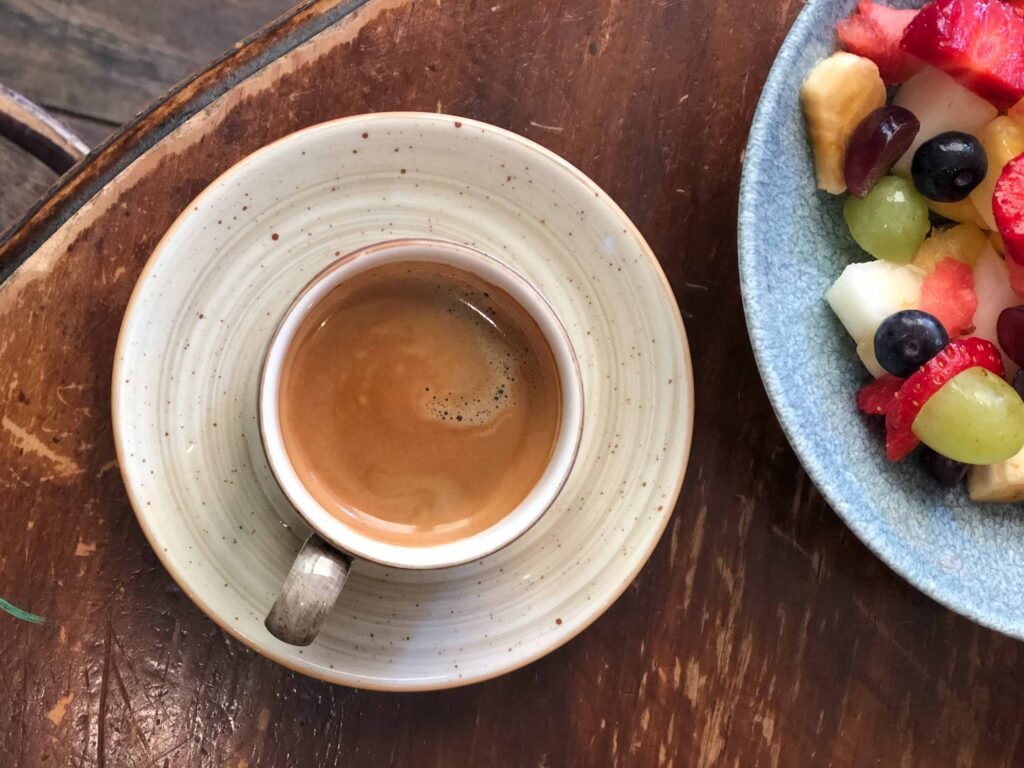
Every time I see those blue flowers along the Swedish roadsides, I think of my grandparents preparing chicory in their little moka back in Italy.
One simple wild flower.
Two countries.
A lifetime of memories.
And if this little flower has inspired you to slow down, notice another beautiful detail of nature and perhaps brew your very first cup of chicory coffee, then a new tradition has already begun.